
Website Design and Development
AI Website Builders vs AI-Assisted Custom Development
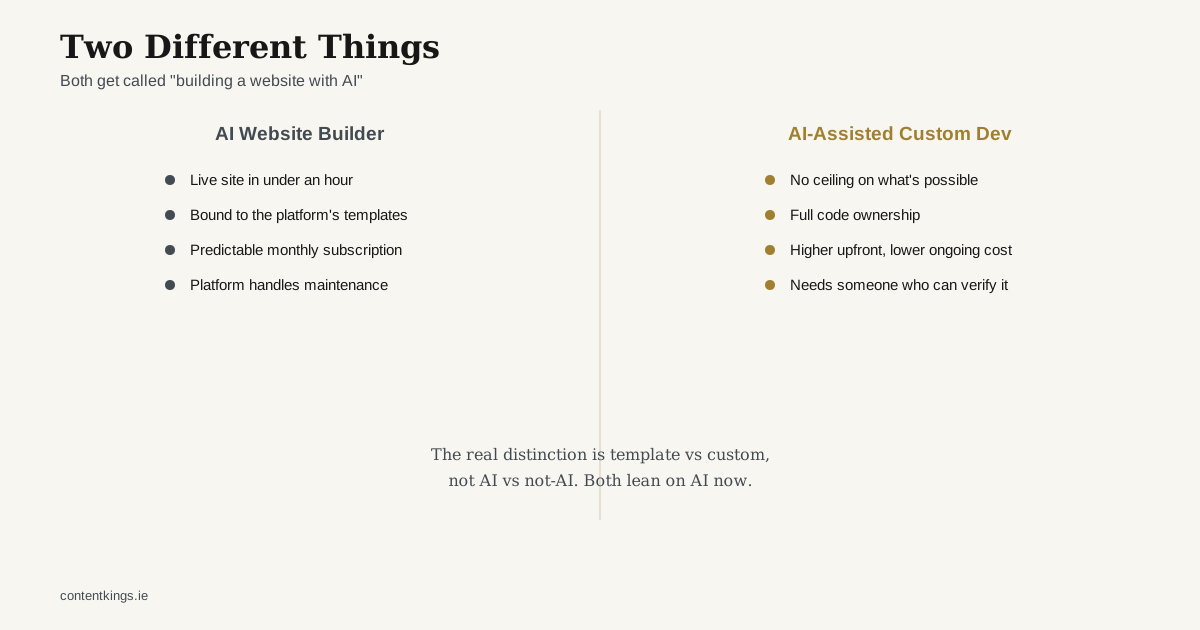
“Building a website with AI” means two genuinely different things, and conflating them leads to the wrong comparison. One is an AI website builder - a platform like Wix or Squarespace where you describe what you want and a tool generates a complete, hosted site from a template. The other is AI-assisted custom development - a developer using AI as a tool inside a normal build process, producing custom code that’s reviewed, tested, and owned outright. This site is the second kind. It’s worth being precise about which one actually fits a given situation, because the honest answer is genuinely “it depends,” not a sales pitch for either.
What an AI website builder actually gives you
Speed, mainly. Describe a business, pick a template, let the tool generate copy and layout, and a live site exists within an hour. That’s a real and legitimate advantage for a business that needs an online presence fast and doesn’t yet have specific technical requirements. The honest tradeoffs: you’re inside that platform’s template system and hosting, which caps how far the design and functionality can diverge from what the builder supports; the generated copy is usually generic until someone edits it by hand; and “customise after it’s generated” has real limits once you’re past surface-level tweaks.
What AI-assisted custom development actually gives you
Full ownership of the code, no platform lock-in, and no ceiling on what’s technically possible - if it can be coded, it can be built, not just configured within a template’s constraints. The honest tradeoff runs the other way: it needs someone who can read and verify what gets generated (see our piece on where that judgement still matters), and it’s a slower start than clicking through a builder’s setup wizard, because the quality bar is “production-ready code,” not “looks fine in the template.”
The real differences, not the marketing version
SEO and performance. A custom static build (what this site runs on) can hit near-perfect Lighthouse scores because there’s no platform overhead to work around. A builder-generated site’s performance ceiling is set by the platform, not by how well it’s configured - still entirely workable for most small businesses, just a different ceiling.
Cost shape. A builder is a predictable monthly subscription. Custom development is higher upfront cost and lower ongoing cost (see our piece on where CMS costs actually hide) - which one is cheaper depends entirely on time horizon, not which is “AI” and which isn’t.
What “customise” actually means. On a builder, customising means working within the platform’s component system. With custom development, customising means changing the actual code - there’s no ceiling, but also no training wheels.
Who maintains it afterward. A builder’s platform handles security updates and infrastructure. Custom code needs someone (in-house or an agency) who understands what was built and can maintain it - which is a real ongoing relationship, not a one-time project.
When each one is actually the right call
A builder is the right call for a straightforward small business site with standard needs, a tight timeline, and no in-house or agency relationship for ongoing development. Custom development is the right call when the site needs something a template genuinely can’t do, when performance and search visibility are a real competitive factor rather than a nice-to-have, or when the business is going to keep investing in the site over years rather than treating it as a one-off.
Neither is more legitimately “AI-built” than the other - both lean on AI assistance in the actual build process now. The honest distinction is template versus custom, not AI versus not-AI. If you’re trying to work out which fits your situation, that’s exactly the conversation to have before committing to either - get in touch via our website design and development page.