
Website Design and Development
Are You Paying Too Much for Your CMS?
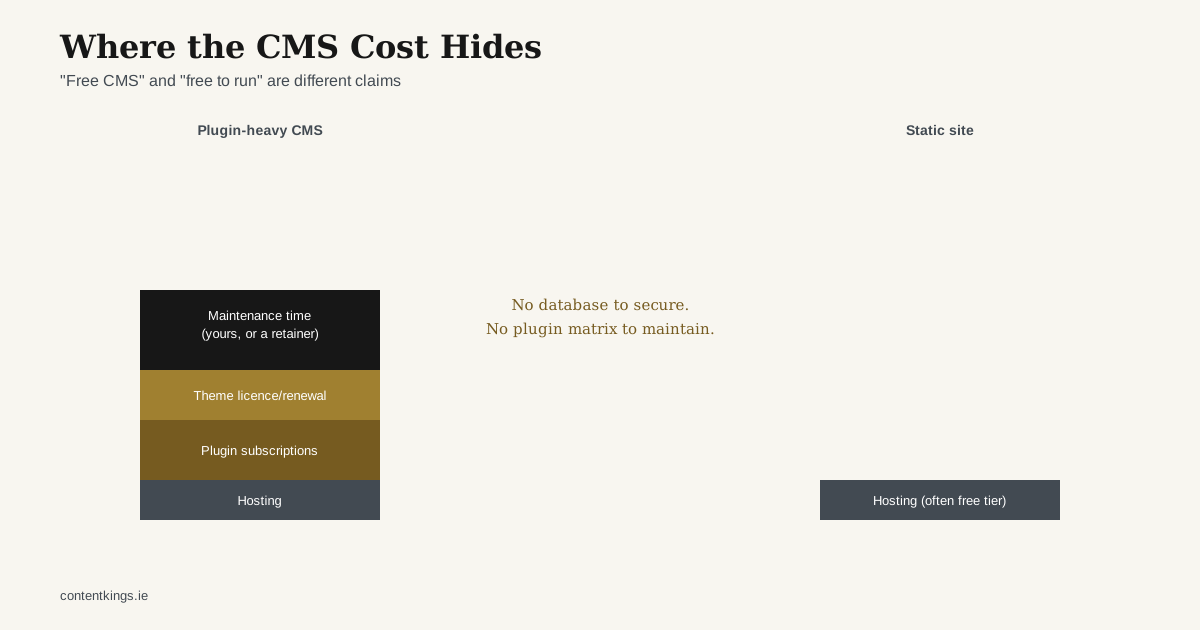
“We’re not paying for a CMS, we’re on WordPress, it’s free” is a sentence we’ve heard from several business owners who were, in fact, paying quite a lot for their CMS - just not in a single visible line item.
Where the real cost hides
WordPress core software is free. What isn’t free, for a typical small-business site:
- Premium theme licence, often £40-100 upfront and sometimes an annual renewal to keep getting updates and support
- Plugin subscriptions - a page builder, an SEO plugin’s premium tier, a form plugin, a backup service, a security plugin, an image optimiser. Individually small (£5-15/month each), collectively often £30-80/month for a modest site
- Managed WordPress hosting priced specifically for WordPress’s resource demands, usually above generic static hosting
- Maintenance time - someone has to keep 15-30 plugins updated and compatible with each other. Either that’s your own time, or it’s a retainer you’re paying an agency or freelancer for
- The slow-site tax - a plugin-heavy WordPress site that loads slowly doesn’t just frustrate visitors; it’s a measurable drag on conversion rate and, via Core Web Vitals, on search ranking too
None of this is a criticism of WordPress as software - it runs a huge share of the web successfully. It’s that “the CMS is free” and “the website costs nothing to run” are two different claims, and the gap between them is usually bigger than people expect until they actually add up a year of renewals.
The comparison that actually matters
The honest way to evaluate CMS cost isn’t licence price alone, it’s total cost of ownership over a realistic lifespan (say, three years): hosting, licences/subscriptions, maintenance time or retainer, and the cost of the inevitable “something broke after a plugin update” afternoon.
A static site (built with something like Astro, which is what this website itself runs on) has a fundamentally different cost shape: no database to secure or back up, no plugin compatibility matrix to maintain, and hosting that can run on Cloudflare’s free or near-free tier because there’s no server-side processing for most requests. The tradeoff is real too - content updates that a non-technical team member could make directly in a WordPress dashboard typically need either a simple headless CMS bolted on, or a developer to make the change. Which model wins depends entirely on how often the site’s content actually changes and who needs to change it.
A full-featured hosted platform (Shopify, Squarespace, Webflow) bundles hosting, security, and updates into one subscription, which is genuinely easier to budget for - but the all-in-one convenience usually comes with less flexibility and, for a growing site with specific needs, the subscription tier that actually covers you can creep upward quickly.
Questions worth asking before assuming your current setup is the economical one
- If you added up every plugin, theme, and hosting renewal from the last 12 months, what’s the actual annual total?
- How many hours (yours or someone else’s) went into keeping the current site running versus improving it?
- When something last broke, how long was the site down or degraded, and what did fixing it cost?
- Does your content actually change often enough to need a full CMS, or would a smaller number of well-maintained static pages genuinely serve the business better?
There’s no universally correct answer here - a content-heavy publisher with multiple daily editors has very different needs from a four-page local service business. But “we’re on a free CMS” is rarely the end of that analysis, and it’s worth running the real numbers before deciding what “too much” actually means for your situation. If you want a second opinion on what your current site is really costing you, that’s a conversation we’re happy to have as part of website design and development.