
Website Design and Development
Where AI-Assisted Development Still Needs a Developer's Judgement
“Can AI replace a web developer?” is the question people actually ask about this, and the honest answer from having just gone through it is: not on its own, no, but the shape of the work it replaces is narrower than either the hype or the scepticism suggests. This website was built with AI doing a large share of the actual typing. It’s a useful case for being specific about where that worked cleanly and where it genuinely needed someone checking its work.
Where it worked cleanly
Scaffolding a new Astro project, wiring up content collections with a schema, writing component markup from a design brief, generating a consistent set of pages from a pattern once the first one was right - all of this moved fast and correctly on the first or second pass. The tedious, well-specified parts of building a site are exactly where AI assistance earns its keep: there’s a clear right answer, and a lot of precedent to draw on.
Where it needed a developer’s judgement
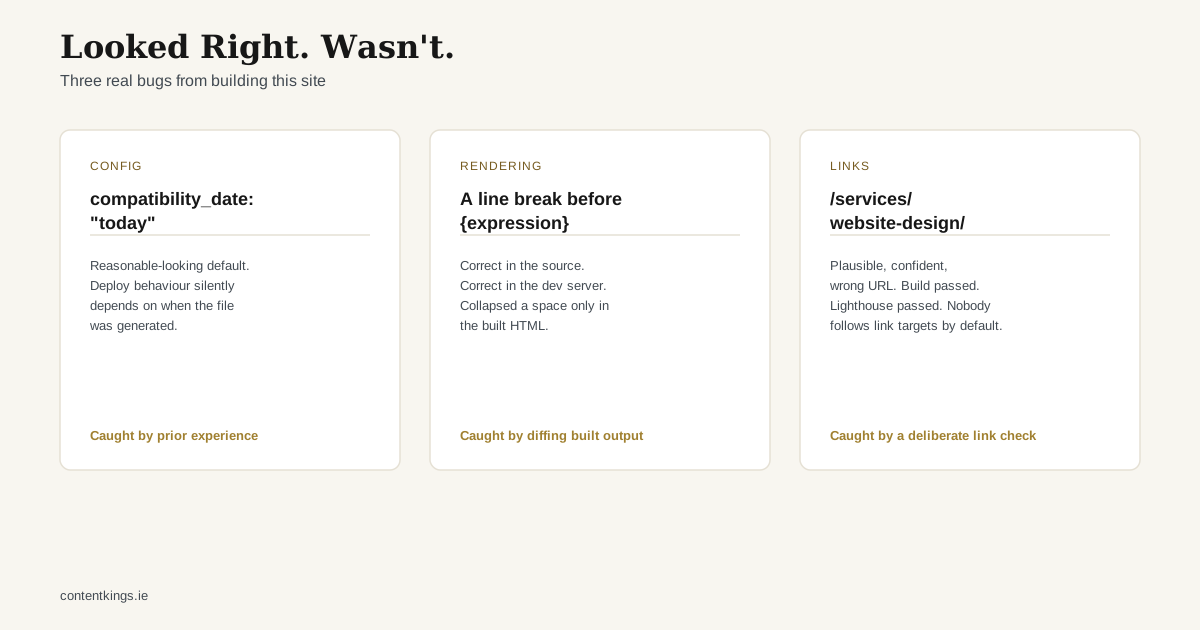
Three real examples from this specific build, not hypotheticals:
A pinned configuration value that looked like a reasonable default. Cloudflare Workers’ wrangler.jsonc requires a compatibility_date field. Left to its own devices, AI assistance will often reach for “today’s date” as the natural-seeming value. That’s wrong - a date tied to “whenever this file happened to be generated” means the deploy behaviour silently depends on when the file was touched, not on an intentional decision. The fix was deliberate: pin a specific date and treat changing it as a conscious choice, not an auto-filled default. This is exactly the kind of mistake that looks completely reasonable in isolation and only reveals itself as a problem once you know the specific failure mode - which is knowledge that comes from having been burned by it before, not from the code itself looking wrong.
A whitespace bug invisible in the tool that wrote it. A line break placed directly before a templated expression collapsed a space in the compiled HTML output - invisible in the dev server’s live rendering, only visible by actually diffing the built HTML files. The AI-generated markup looked completely correct when read as markup. It only failed in a specific rendering context that nobody checks by default. Catching it meant deliberately looking at the thing a developer would check and an AI assistant, left unprompted, wouldn’t: the actual production output, not the source.
A broken internal link that passed every automated check except the one that actually followed it. An AI-drafted article linked to /services/website-design/ when the real page was /services/web-design/ - a plausible-sounding guess at a URL, not a verified one. The build succeeded. Lighthouse and axe-core both passed, because neither tool crawls outbound link targets by default. It was caught only because an explicit link-check step was added afterward, specifically because this exact failure mode (a confident, plausible, wrong URL) is a known pattern with AI-generated content, not a one-off accident.
The pattern underneath all three
None of these were AI assistance getting something conceptually wrong. Each was a case where the generated output was locally correct and plausible, and the mistake only became visible from a wider context the tool wasn’t given: knowledge of a specific historical failure mode, a check against the actual compiled output rather than the source, or a deliberate verification step that isn’t part of normal development but should be when AI is doing some of the writing.
That’s the honest shape of “where AI-assisted development still needs a developer”: not big conceptual errors, but confident, plausible, locally-correct mistakes that only show up if someone is specifically looking for the gap between “looks right” and “is right.” Treating AI-generated output the way you’d treat a capable but unfamiliar junior developer’s first pass - reviewed, tested against the actual real-world behaviour, not rubber-stamped because it reads fluently - is what made this actually work.
If you’re weighing AI-assisted development for your own site and want a second opinion on where that judgement needs to sit, that’s part of what website design and development work looks like here.