
Content Strategy
How We Actually Use AI in Our Content Process
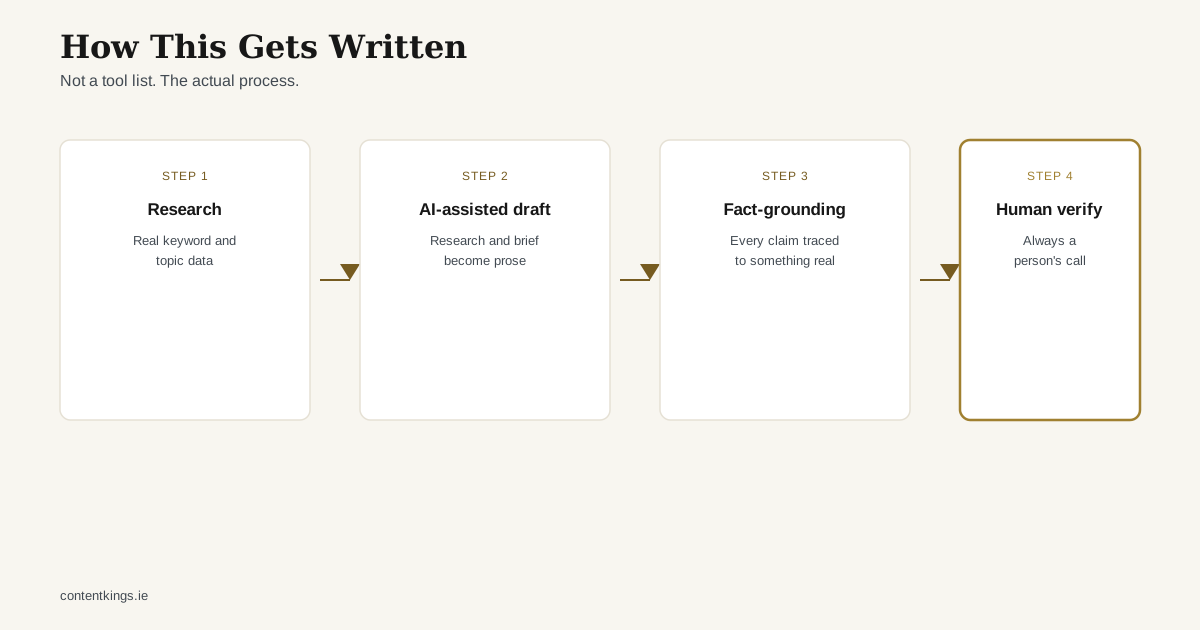
Most “using AI for content creation” articles are a listicle of tools. That’s a reasonable thing to want, but it doesn’t actually answer the more useful question, which is: what does AI assistance change about how a specific piece of content actually gets made, start to finish, on a real site. Here’s that answer for this one.
Where AI assistance sits in the process
Research and drafting. A first draft, informed by real keyword and topic research (we use NeuronWriter - see our piece on what that research actually showed us), gets written with AI assistance. This is the stage where AI genuinely speeds things up: turning research and a clear brief into organised, readable prose.
Fact-grounding, not fact-inventing. Every specific claim, number, or example in an article on this site has to trace back to something real and checkable - our own project files, documented decisions, a client’s actual published results, or an external source we can point to. AI assistance is not used to generate plausible-sounding statistics or testimonials, because that’s exactly the kind of fabrication that destroys trust the moment a reader checks.
Editing and verification, always human. Every article gets checked against a specific bar before publishing: does it say something a generic AI-prompted article on the same topic wouldn’t say, is every specific claim traceable to something real, does it sound like it was written by someone with actual first-hand experience of the topic rather than a competent summary of what’s already out there. That check is a deliberate human decision, every time, not a formality.
What this looks like in practice, with a real example
The articles on this site that reference our own project work - the audit results, the NeuronWriter research, the legacy content recovery - are the clearest example of the process working as intended. The specific facts (word counts, dates, bug descriptions, audit scores) come from the actual project files, not from a model’s general knowledge of what a typical web project involves. AI assistance structured and wrote the prose around those facts; it didn’t invent the facts themselves.
Where we’ve deliberately drawn a line
No fabricated testimonials or client quotes, ever, regardless of how plausible they’d sound. No invented statistics dressed up as research. No claims about awards, partnerships, or credentials that aren’t genuinely true - a specific instruction baked into how this entire site was built, not a policy adopted after the fact. No publishing volume for its own sake - this site deliberately didn’t bulk-republish the 59 generic posts recovered from the old site’s history, even though doing so would have been fast and would have inflated the apparent size of the content library.
Why this matters more than “did a human or an AI type this sentence”
The honest reality is that the line between “AI-assisted” and “human-written” is less meaningful than it sounds once editing and fact-checking are genuinely rigorous - a heavily-edited AI draft and a heavily-drafted human piece can end up equally trustworthy, or equally not, depending entirely on how seriously the verification step was taken. That’s the actual thing worth being transparent about, and it’s why this piece exists: not to claim AI assistance is invisible or irrelevant, but to be specific about exactly where it sits and where it doesn’t, rather than leaving that as a vague, unstated assumption.
If you’re weighing how AI fits into your own content process and want a straight answer rather than a tool recommendation, that’s a conversation for our content strategy services.