
SEO and Organic Search
What NeuronWriter's AI Research Actually Showed Us
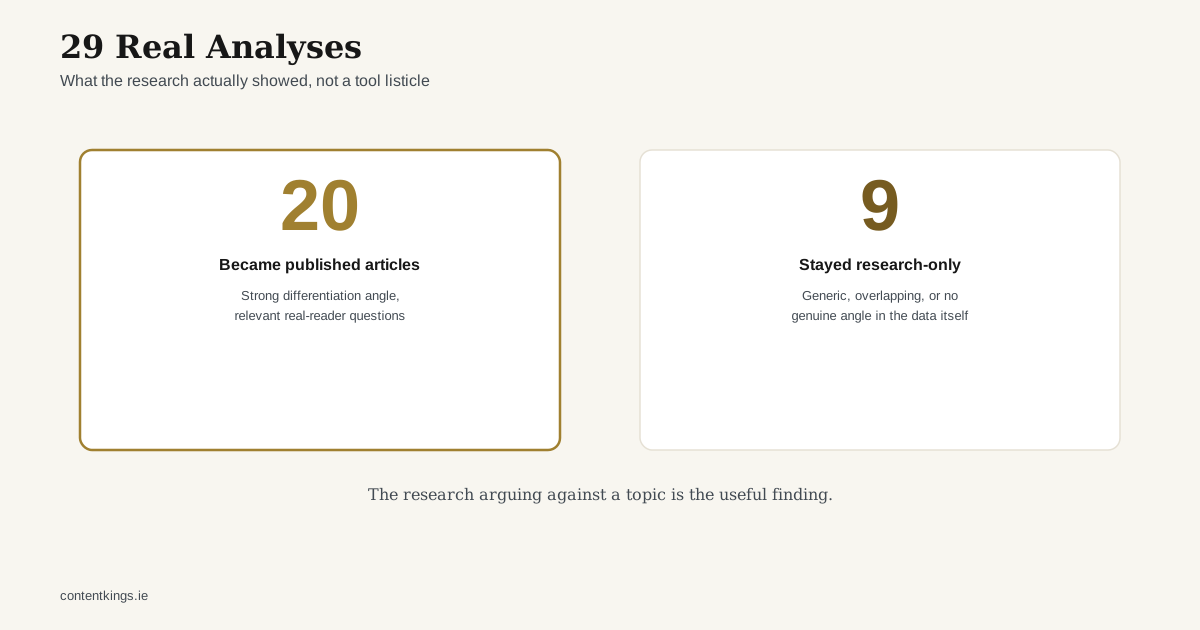
Most “best AI keyword research tools” articles are a comparison listicle, which is a reasonable thing to want but doesn’t tell you much about what the output actually looks like or how to use it responsibly. This is the opposite: one specific tool, used for one real project, with the actual outcome - including the part most content about keyword research tools skips, which is how many topics the research argued against writing.
What NeuronWriter actually does
For a given keyword, it analyses the current top-ranking competitor pages and surfaces: suggested content terms with target usage frequency, People Also Ask questions, a topic-importance matrix, suggested headings, target word count and readability benchmarks based on what’s actually ranking, and a full competitor breakdown. It’s AI-assisted research - the tool does the data-gathering and pattern-matching across dozens of competitor pages; a person still has to decide what the data actually means for a specific piece of content.
What we actually used it for
Researching this site’s own Insights section. 29 separate analyses, run across two research sessions, against real keyword targets relevant to the business - not hypothetical examples. Some of the output was strong and directly usable. Some of it was data that argued against writing the piece at all, which is the more useful finding, because it’s the thing a tool-comparison listicle never shows.
A real example of the research working as intended
One query, for a broad “how to use AI for content creation” type keyword, came back dominated by generic listicles of AI tools and reached 97% informational intent but a crowded, well-covered SERP. Rather than add another generic entry to an already-saturated space, that research became the basis for a specific, honest process breakdown instead - the same underlying topic, but the actual differentiated angle the generic listicles weren’t covering.
A real example of the research arguing against publishing
Several queries came back with People Also Ask data that was essentially generic textbook definitions, or heavy topical overlap with something already written. Those topics stayed as research, not articles - the honest outcome of the tool doing its job correctly, not a failure of the research.
What the tool can’t do for you
It can’t tell you whether a topic is genuinely true for your business, whether a claim is one you can actually stand behind, or whether the resulting article would say anything a generic AI-prompted piece on the same keyword wouldn’t already say. Those are judgement calls the tool has no way to make, and treating its output as a content brief to execute literally - hit this word count, use these terms at this frequency - produces exactly the generic, keyword-stuffed writing that’s easy to spot and doesn’t perform well anyway, regardless of what the terms list suggested.
The honest way to use AI-assisted keyword research
Run the analysis. Read what it actually shows, not what you hoped it would show. Let it inform structure, real reader questions, and genuine competitive gaps. Then write the piece the way you’d write it if you actually knew the topic - which, if the research pointed you toward a topic genuinely worth writing about, you should.
If you want help turning research like this into content that’s actually worth publishing rather than technically optimised filler, that’s what our SEO and content services are for.