
SEO and Organic Search
How to Create SEO-Optimised Content (Without It Reading Like SEO Content)
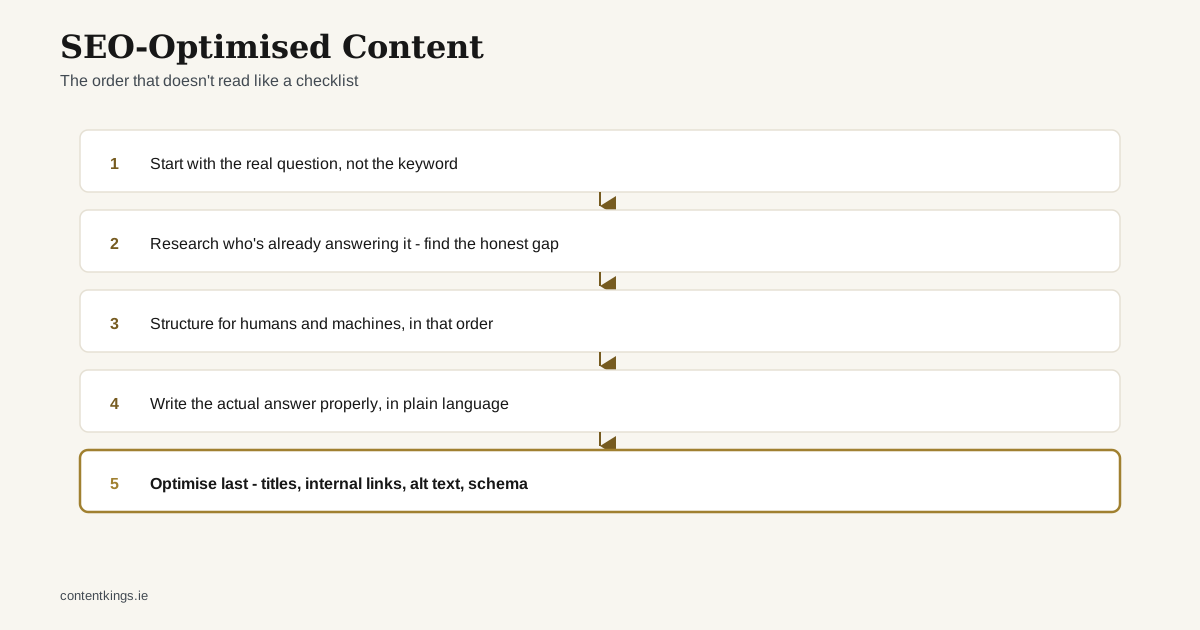
There’s a recognisable genre of “SEO content” - keyword in the title, keyword in the first sentence, keyword repeated at a specific density, a bullet-pointed “key takeaways” box, an FAQ section bolted on at the end regardless of whether the questions are real. It’s optimised for a checklist, and it reads like it. The content that actually ranks and holds its ranking over time tends to do the optimisation work in a different order, with the writing itself coming first.
Start with the actual question, not the keyword
Before touching a keyword tool, write down the real question a real person is asking when they’d land on this page. “How to create SEO-optimised content” isn’t really the question - the question underneath it is closer to “how do I write content that ranks without it sounding obviously written-for-Google.” Answering the real question thoroughly tends to naturally satisfy the keyword too, because the keyword is just how people express that question.
Research who’s already answering it, honestly
Look at what’s currently ranking for the topic. Not to copy it - to find the gap. Is everyone covering the surface level and missing the practical detail? Is everyone writing generically when the topic actually benefits from a specific, first-hand angle? The honest differentiation question is: what could this page say that the current top results don’t, that’s actually true and actually useful?
Structure for both humans and machines, in that order
- One clear H1 that states what the page is about
- Logical H2s that break the topic into its real sub-questions, not into keyword variations for their own sake
- Short paragraphs and scannable formatting, because most readers skim before they commit to reading
- A meta title and description that accurately describe the content (and that a human would actually want to click) - not a keyword-stuffed restatement
Write it properly before optimising it
This is the step that gets skipped. Write the actual answer, in plain language, as if explaining it to someone who asked you directly - then go back and check: does the title match what’s actually inside, is the structure logical, have you naturally used the terms and related concepts someone researching this topic would expect to see (this is also roughly what semantic search rewards). Optimising a genuinely good piece of writing is a quick pass. Trying to “optimise” your way into a genuinely good piece of writing from a thin draft doesn’t really work.
Technical basics that still matter
- Internal links to genuinely related content on your own site (not forced - only where it actually helps the reader)
- Descriptive, keyword-aware URLs where practical
- Image alt text that accurately describes the image
- Structured data (schema markup) where it’s genuinely applicable, so search engines can understand what type of content they’re looking at
The actual test
Before publishing, the honest question is: if someone found this page, read it fully, and then searched for the same thing again a week later, would they come back to this page, or would they have forgotten it existed? Content that passes that test tends to also perform well in search, because the two things search engines are trying to reward - genuine usefulness and genuine relevance - are the same two things that make a reader come back.
If you’d rather this be handled end-to-end against your own topics and competitors, that’s what our content and SEO work is actually for.