
SEO and Organic Search
What Is Semantic Search and How to Optimise For It
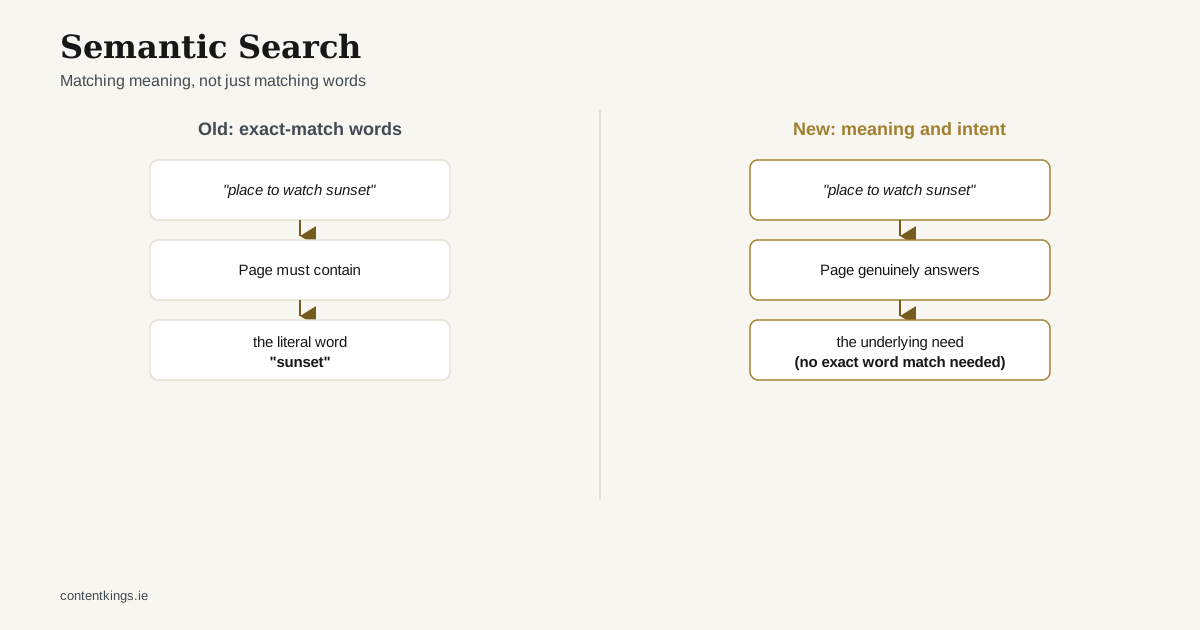
Older SEO advice treated a search engine roughly like a very literal filing clerk: match the exact words in the query to the exact words on the page, and the closer the match, the better the ranking. That model is largely obsolete. Semantic search means the engine is trying to match meaning and intent, not just text strings - which is why you can now search “place to watch the sunset in a seaside town” and get relevant results for a coastal viewpoint page that never uses the word “sunset” at all, if that page genuinely answers the underlying need.
What changed, practically
Modern search systems use natural language processing to understand synonyms, related concepts, and the relationships between entities (people, places, organisations, things) rather than treating every query as a bag of literal keywords to pattern-match. Combined with structured data and years of accumulated understanding of how real people phrase real questions, this means:
- A page can rank for a phrase it never literally contains, if it thoroughly answers the question behind that phrase
- Keyword-stuffing (repeating an exact phrase unnaturally often) does nothing useful and can read as spam
- Context matters - the same word means different things in different surrounding content, and search engines are increasingly good at telling those apart
What this means for how you should actually write
Write for the question, not the phrase. If someone’s underlying question is “how do I know if my website is slow,” answering that fully (what “slow” actually means, how to check it, what causes it, what to do about it) will naturally pick up a wide net of related search phrasings, far more than trying to engineer the exact string “is my website slow” into the copy repeatedly.
Use related terms and entities naturally. An article about Core Web Vitals that also naturally mentions Google PageSpeed Insights, LCP, loading time, and user experience, because those things are genuinely part of the topic, signals topical depth far more effectively than mechanically repeating one target phrase.
Structure helps machines understand, not just humans. Clear headings, logical hierarchy (one H1, properly nested H2s/H3s), and structured data (schema markup) give search engines explicit signals about what a page is about and how its parts relate - on top of whatever they infer from the prose itself.
Depth beats repetition. A thorough, accurate piece that covers a topic’s real questions, edge cases, and practical detail will outperform a shorter piece that hits the target keyword more times but says less.
The honest caveat
Semantic search doesn’t mean keywords are irrelevant - the words people actually type still matter as a signal of what they want, and understanding common phrasing is still useful research. What’s changed is that exact-match phrase density stopped being the thing to optimise for. The actual optimisation target now is closer to: does this page genuinely, thoroughly answer what someone meant when they searched, in a way a knowledgeable person would recognise as correct and complete.
That’s a harder thing to fake than keyword density ever was, which is, on balance, a good thing for anyone writing content that’s actually worth reading.