
Content Strategy
The Content Marketing Metrics Actually Worth Tracking
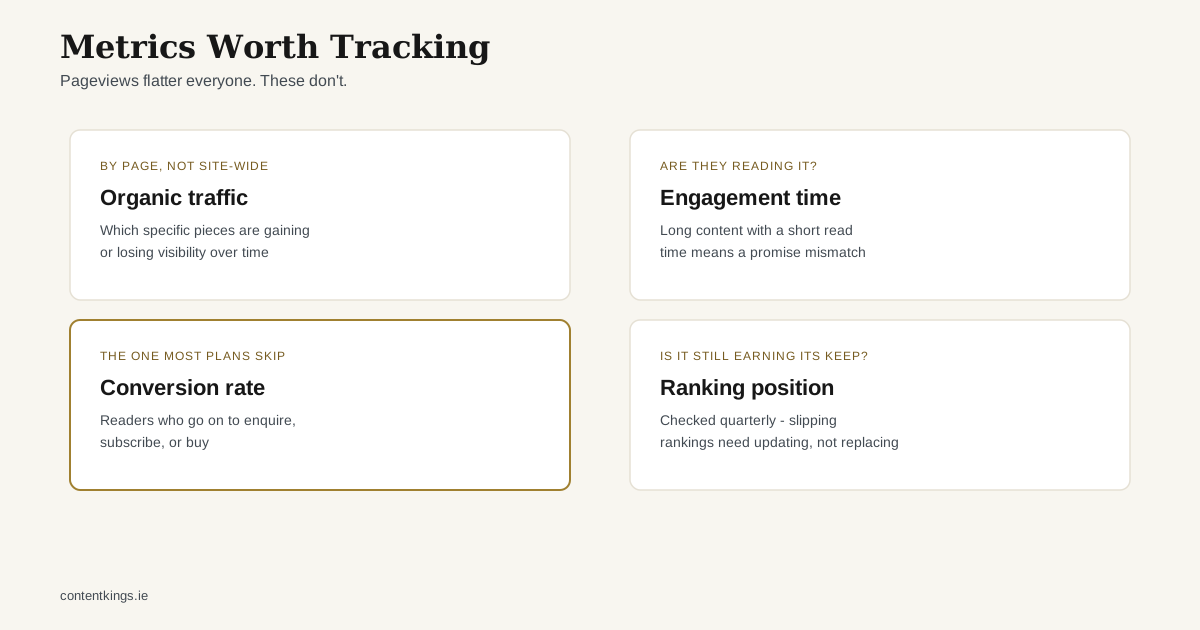
Pageviews are the easiest content metric to report and the least useful one to act on. A page can get a thousand views and generate zero enquiries; another can get eighty views and bring in the one client that’s worth the whole year’s content budget. If pageviews are the only number in the report, you have no way of telling those two pages apart.
Here’s a shorter, more honest list.
Engagement: are people actually reading it?
Average engagement time / time on page tells you whether people who land on a piece actually read it, or bounce immediately. A long, thorough article with a 20-second average engagement time usually means the content isn’t matching what the search or click promised, not that the topic was wrong.
Scroll depth, where you can measure it, is a more direct version of the same question - did people get to the part that actually answers what they came for, or drop off before the useful bit.
Acquisition: where is it actually coming from?
Organic search traffic by page, tracked over time, shows whether specific content is gaining or losing visibility - more useful than a single site-wide traffic number, because it tells you which pieces are working and which have gone stale.
Referral sources - which other sites are actually sending people to you - tells you whether any linkable content (see our piece on that) is doing its job.
The metric most content plans skip entirely: outcomes
Conversion rate from content pages - how many readers of a given article go on to enquire, subscribe, or buy - is the metric that actually connects content to the business. It requires conversion tracking to be properly set up (goals or events in your analytics tool, tied to form submissions or key actions), which is extra setup work, which is exactly why a lot of content reporting skips it and falls back to pageviews instead.
Assisted conversions matter too - a blog post someone reads in month one often isn’t the last thing they touch before converting in month three. Looking only at last-click attribution undercounts informational content’s real contribution.
Longevity: is it still earning its keep?
Search ranking position over time for a page’s main target terms - content that ranked well a year ago and has quietly slipped needs updating, not replacing. This is also where keeping an eye on Search Console data earns its place in a regular routine rather than a one-off setup task.
What we’d actually recommend tracking, if you only pick a handful
- Organic traffic by individual page, trended over time, not just site-wide totals
- Average engagement time per page
- Conversion rate from content pages specifically, even if it needs some analytics setup work to get right
- Ranking position for each piece’s main target term, checked quarterly
That’s a shorter list than most “15 KPIs you must track” articles suggest, deliberately. A small number of metrics you actually look at and act on beats a long dashboard nobody opens.