
Digital Publishing
Why Storytelling Is Not a Content Marketing Panacea
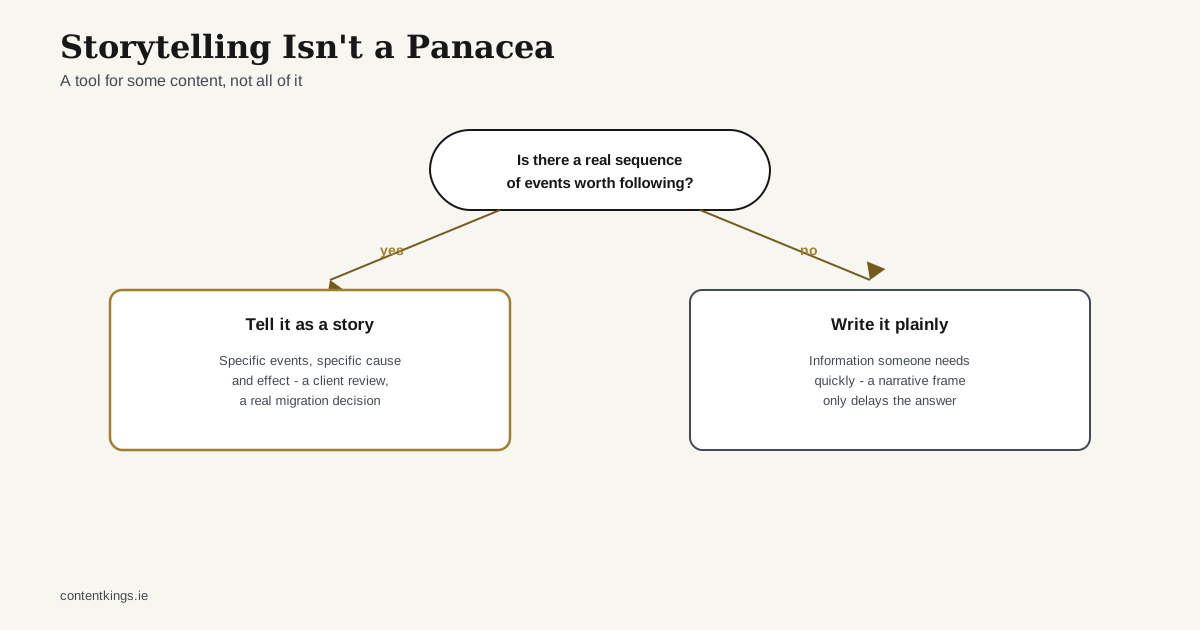
“People don’t buy products, they buy stories” gets repeated in content marketing circles often enough that it’s started to function as an unquestioned rule rather than a useful observation. It’s not wrong, exactly - narrative genuinely does help people connect with and remember information. But treated as a universal law rather than one tool among several, it pushes businesses toward manufacturing a “brand story” where a plain, clear explanation would have served the reader better.
Where storytelling genuinely earns its place
A narrative structure helps when there’s an actual sequence of cause and effect worth following - a client had a specific problem, something specific was tried, something specific changed as a result. That’s a real story, and telling it as one (rather than as a bullet-pointed feature list) helps a reader understand not just what happened but why it mattered. Origin stories can work the same way, when there’s a genuine, specific reason a business exists that isn’t just “we saw a gap in the market” restated with more adjectives.
Where it gets forced, and it shows
The strain shows up reliably in a few places:
Technical and informational content. If someone’s searching “how do I set up Google Search Console,” wrapping the answer in a narrative framing (“picture this: you’ve just launched your dream website…”) adds words between the reader and the thing they came for. It doesn’t help them trust the answer; it delays it.
Manufactured brand narratives. A story invented to sound meaningful rather than because something meaningful actually happened reads as exactly that to anyone paying attention. Readers are generally better at detecting manufactured sentiment than content strategy decks give them credit for.
Using narrative as a substitute for substance. A well-told story about a vague, unspecified success is less persuasive than a plainly stated, specific, checkable fact. “We helped a client transform their digital journey” (a story shape with no actual content in it) does less work than “we reduced their page load time from 4.8 seconds to 1.2 seconds” (a plain fact with no story structure at all).
The actual decision rule
Storytelling is a structural tool suited to content that’s genuinely about a sequence of events, change, or human stakes. It’s a poor fit for content that’s primarily about information someone needs quickly and accurately. The honest test before reaching for a narrative frame: is there an actual story here, with real specific events, or am I building a story-shaped container to put plain information into because I’ve been told stories perform better?
If there’s a real story, by all means tell it properly, with the specific detail that makes it believable rather than the generic shape that makes it recognisable as “a brand story.” If there isn’t, the plainer, more direct version of the content will usually serve the reader, and the business, better than forcing one.
This applies to how we write everything on this site, including the articles in this collection. Some of it is genuinely narrative, because the underlying thing (a client site review, a real migration decision) was a real sequence of events. A fair amount of it is closer to a direct explanation, because that’s what the topic actually called for. Neither is ignoring good practice, they’re just the right tool for what’s actually being written.