
Practical Website Guides
Using AI to Audit a Legacy Website Before a Rebuild
Most website-audit-before-redesign advice is written for a site where the current database is the whole picture. That assumption breaks down for an older site that’s changed platforms, lost content, or simply existed long enough that nobody fully remembers what’s actually out there. This site’s own rebuild was exactly that situation, and the audit process is worth documenting in specific detail rather than general advice, because the specifics are what actually mattered.
Why the live database wasn’t enough
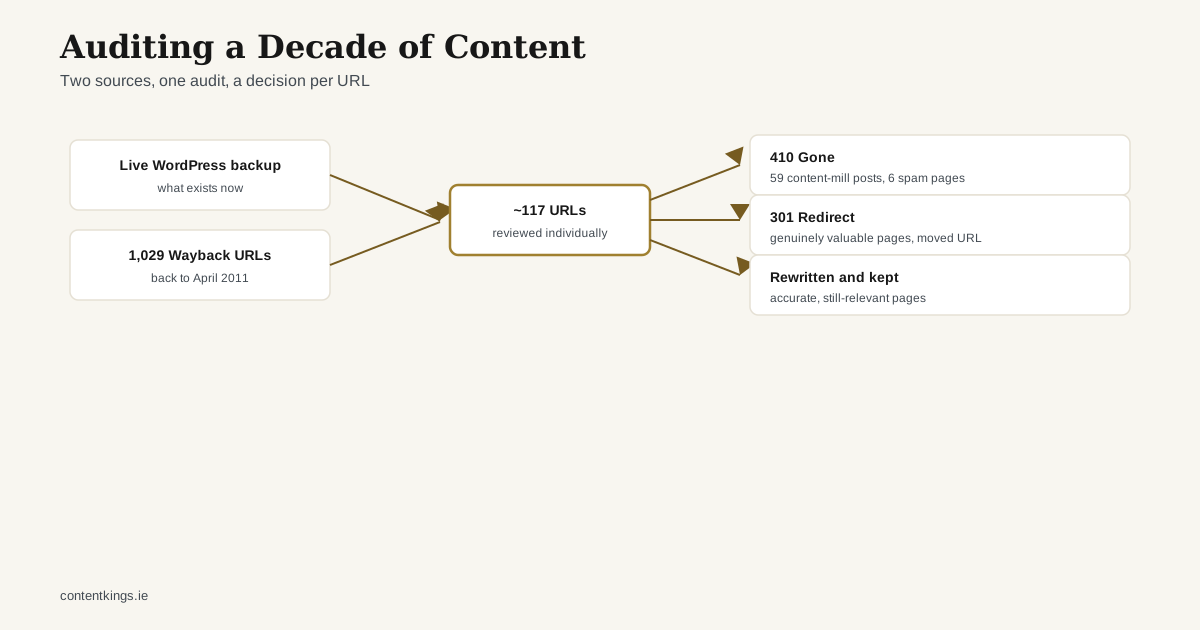
The previous contentkings.ie had a live WordPress backup, which is the obvious place to start - but relying on it alone would have missed years of content that had already been deleted from the live site before the backup was taken. The fix was pulling the Wayback Machine’s full CDX archive index as a second, independent source: 1,029 unique archived URLs, going back to the earliest snapshot in April 2011. Cross-referencing the live backup against the historical archive surfaced content neither source alone would have shown.
What the audit actually found
Three genuinely distinct categories, each needing a different decision, not one blanket rule:
59 “content-marketing-mill” blog posts from 2021-2022 - generic, undated, template-driven posts (“10 TOOLS TO…”, “5 TIPS FOR…”) with no first-hand experience or evidence behind any of them. This is precisely the pattern worth watching for in any older site’s content: volume produced to fill a calendar, not because there was something specific worth saying.
6 pharma-spam URLs from a single day in February 2015 - /buy-cialis-online-uk/ and similar, captured exactly once, all returning HTTP 200. This is the textbook signature of a compromised WordPress install that had spam pages injected into it, not legitimate content. Worth flagging specifically: a content audit on an older site should actively look for this pattern, because it’s a security history fact worth knowing even if it’s not operationally relevant to a from-scratch rebuild.
A handful of genuinely good pages - the About page, the real service descriptions - that had accurate, non-generic content worth carrying forward in rewritten form, not discarding just because they were old.
The per-URL decision process
Every one of the roughly 117 distinct URLs identified got one of three outcomes, decided individually, not by category-wide rule:
- 410 (Gone) for the content-mill posts and the spam pages - deliberately not 301-redirected to the homepage, because a soft blanket redirect would have told Google “this content still exists, just moved,” which wasn’t true
- 301 redirect for genuinely valuable pages that moved to a new URL structure
- Rewritten and kept for the small number of pages with real, accurate, still-relevant content
The “never bulk-redirect everything to the homepage” decision is the one worth underlining. It’s the easy default when migrating an old site - and it’s wrong, because it tells search engines content exists at URLs where it no longer does, which does nothing for rankings and actively muddies the signal for the URLs that do deserve weight.
Where AI assistance actually helped, and where it didn’t
Querying and cross-referencing 1,029 archived URLs against a database export is exactly the kind of large, mechanical data-matching task AI assistance handles well and a human would find tedious and error-prone at that scale. The classification decisions - is this post genuinely useful or template filler, is this URL worth a redirect or a clean 410 - needed a human judgement call informed by the brief’s actual standards, not a rule a tool could apply on its own. The audit worked because those two things stayed separate: AI did the data-gathering and pattern-matching, a person made the keep-or-retire calls.
If you’re facing a rebuild of an older site and don’t know what’s actually sitting in its history, that’s exactly the kind of audit we do as part of website design and development work, before a single new page gets built.