
Practical Website Guides
How Google Trends Data Can Help Content Marketers
Google Trends is free, genuinely useful, and very easy to misread. It shows relative search interest over time for a term, scaled 0-100 against its own peak in the chosen date range and region - it does not show absolute search volume, and a common mistake is treating a rising line as proof of growing demand in real numbers when it might just mean interest is rising relative to a historically quiet period.
With that caveat understood, here’s where it’s actually useful for planning content.
Spotting seasonality before you need to act on it
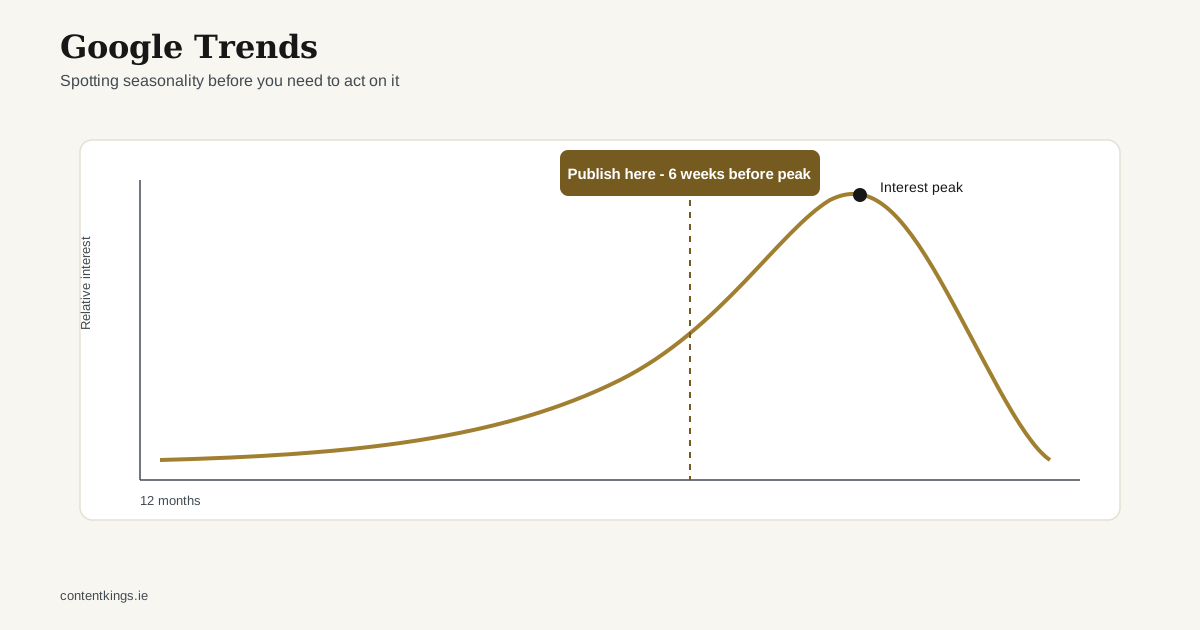
Plenty of searches have a predictable annual rhythm - holiday-related terms, event-driven topics, anything tied to a season or a calendar date. Trends makes that rhythm visible at a glance, which matters for planning: if a term reliably spikes six weeks before a particular date every year, that’s when the content needs to already be published and indexed, not when the spike happens. Search engines need time to crawl and rank new content; publishing on the day interest peaks is usually too late to capture much of it.
Comparing related terms
Trends lets you compare up to five terms side by side on the same scale. This is more useful than it sounds for deciding which phrasing to actually build a page around when two or three plausible options exist - if one term consistently tracks well above the alternatives in your target region, that’s a reasonable tie-breaker (though it should be read alongside actual keyword research, not instead of it, since Trends doesn’t show you absolute volume or competition).
Catching a genuine shift versus noise
A short-lived spike (days) is usually a news event - not generally worth restructuring a content plan around unless you’re doing genuinely timely commentary. A sustained change across many months, especially one that holds after you adjust the date range, is more likely a real shift in how people search for something, and worth investigating what’s driving it before deciding whether to respond.
Regional breakdown
Trends can be filtered by country and, for some terms, by region within a country. For a business serving a specific geographic area (we’re based in Northern Ireland and write with that regional context in mind for a lot of our own planning), checking whether interest in a term looks different locally versus nationally is a genuinely practical use - broad national data can mask a very different local picture.
What Trends can’t tell you
- It can’t tell you search volume - pair it with Search Console data (your own actual queries) or a keyword research tool for real numbers
- It can’t tell you intent - a rising trend line doesn’t say whether people are researching, comparing, or ready to buy
- It can’t tell you anything about competition - a rising, high-interest term might already be thoroughly covered by sites with far more authority than yours
Used for what it’s actually good at - spotting seasonality early, comparing relative interest between phrasings, and catching genuine shifts versus noise - Trends earns a regular five-minute slot in content planning. Used as a substitute for real keyword research, it’ll mislead you more often than it helps.