
SEO and Organic Search
How to Choose the Right Keywords for SEO
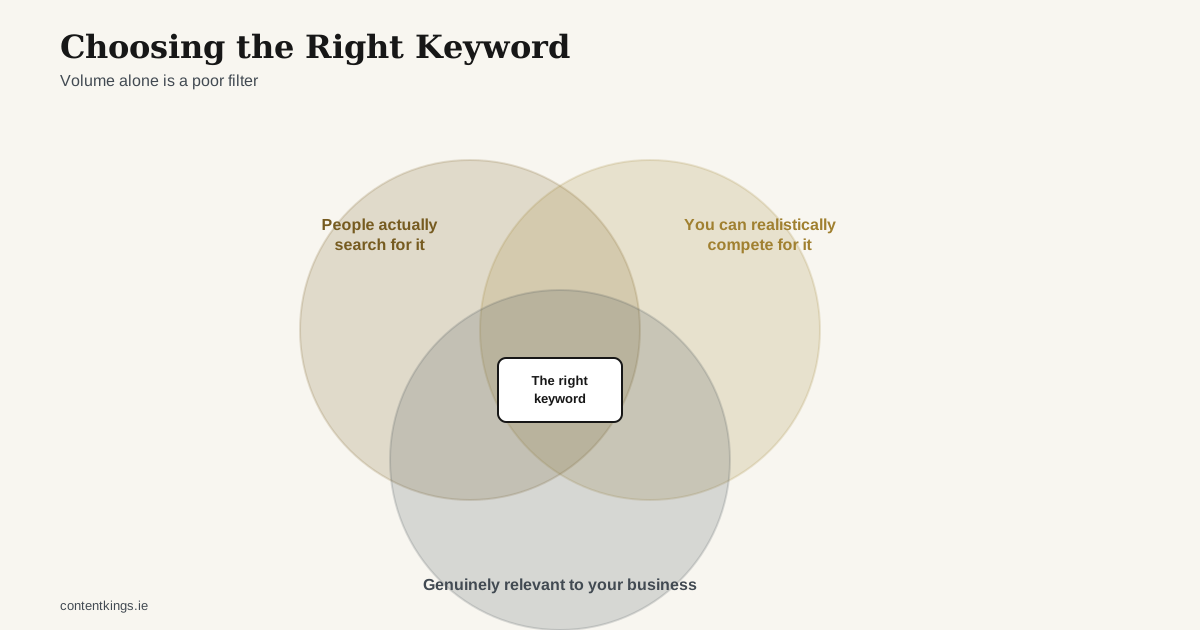
The most common mistake in keyword research isn’t picking the wrong keyword, it’s optimising the selection process for the wrong thing: raw search volume. A keyword with 10,000 monthly searches and no realistic path to ranking, or that attracts the wrong kind of visitor entirely, is worse than a keyword with 80 searches a month from exactly the people who’d actually buy from you.
Start with intent, not volume
Every search query sits somewhere on a rough spectrum:
- Informational - “how does X work”, “what is Y” - someone researching, not yet ready to buy
- Commercial investigation - “best X for Y”, “X vs Y” - comparing options, closer to a decision
- Transactional - “X near me”, “buy X”, “X price” - ready to act
Writing an informational article and expecting it to convert like a transactional landing page (or vice versa) is a mismatch that no amount of keyword density fixes. Figure out what someone actually wants when they type a given phrase before deciding what kind of page should answer it - and check this by actually searching the term yourself and looking at what’s currently ranking, not by guessing.
Then look at realistic competition, not just difficulty scores
Keyword tools’ “difficulty” scores are a rough proxy, useful for triage but not gospel. A more reliable check: search the term and look at who’s actually ranking. If the first page is all major national brands, government sites, or Wikipedia, a new or small site has a genuinely hard climb on that exact phrase - not impossible, but worth knowing going in. If the first page includes smaller sites, forum threads, or content that’s thin and dated, there’s a real opening.
Think in terms of topics, not single keywords
Modern search (and modern SEO) rewards covering a topic thoroughly more than it rewards hitting one exact keyword phrase repeatedly. A single well-researched article naturally picks up dozens of related long-tail variations and question-based searches just by genuinely answering the topic in depth - this is closer to how semantic search actually evaluates relevance now. Chasing exact-match phrasing for its own sake is largely a wasted effort compared to writing the most complete, accurate answer to the underlying question.
Match keywords to business reality
A keyword can have perfect volume and perfect intent and still be wrong for you if:
- It’s for a service or product you don’t actually offer
- It implies a price point, location, or audience that doesn’t match your business
- Ranking for it would bring traffic that bounces immediately because the page can’t deliver what the search implied
The best keywords sit at the intersection of three things: people are actually searching for it, you can realistically compete for it, and it’s genuinely relevant to what you offer. Optimising for any one of those alone, especially volume alone, produces content that technically “targets a keyword” but does nothing for the business behind it.
A practical starting process
- List the real questions customers actually ask you, in their own words, before you open any tool
- Check each one in Google Search Console’s existing query data if you have any history, or search them directly and look at the current results
- Group related questions into topics rather than treating each as a separate article
- Prioritise by a combination of relevance to your actual offering and realistic competitiveness, not search volume alone
If you want this done properly against your specific market rather than generically, that’s the starting point of any SEO engagement we take on.