
Content Strategy
The Content Kings Guide to Conversion Copywriting
Conversion copywriting has a reputation problem, mostly earned by a particular style of aggressive, hype-heavy sales writing - countdown timers, exclamation marks, “act now” urgency on things that have no genuine urgency. That’s one version of it, and not a very durable one. The actual discipline underneath it is simpler and less dramatic: writing that removes the specific reasons a reader hesitates, so the ones who were already a genuine fit for what you offer don’t drop off before taking the next step.
It starts with knowing what the hesitation actually is
Every page has a drop-off point, and most pages never investigate why. Before rewriting anything, it’s worth asking: at the point someone leaves this page without enquiring, what’s the likely reason? Common ones, in our experience:
- They’re not sure this applies to their specific situation
- They don’t understand what happens after they click the button (what’s the next step, how long does it take, is there a cost)
- They don’t trust that the claims on the page are real
- The actual action required (long form, no clear phone number, buried contact link) is more effort than the page has earned
Each of those has a different fix. Generic “better copy” advice doesn’t help until you know which one you’re actually dealing with.
Specificity beats enthusiasm
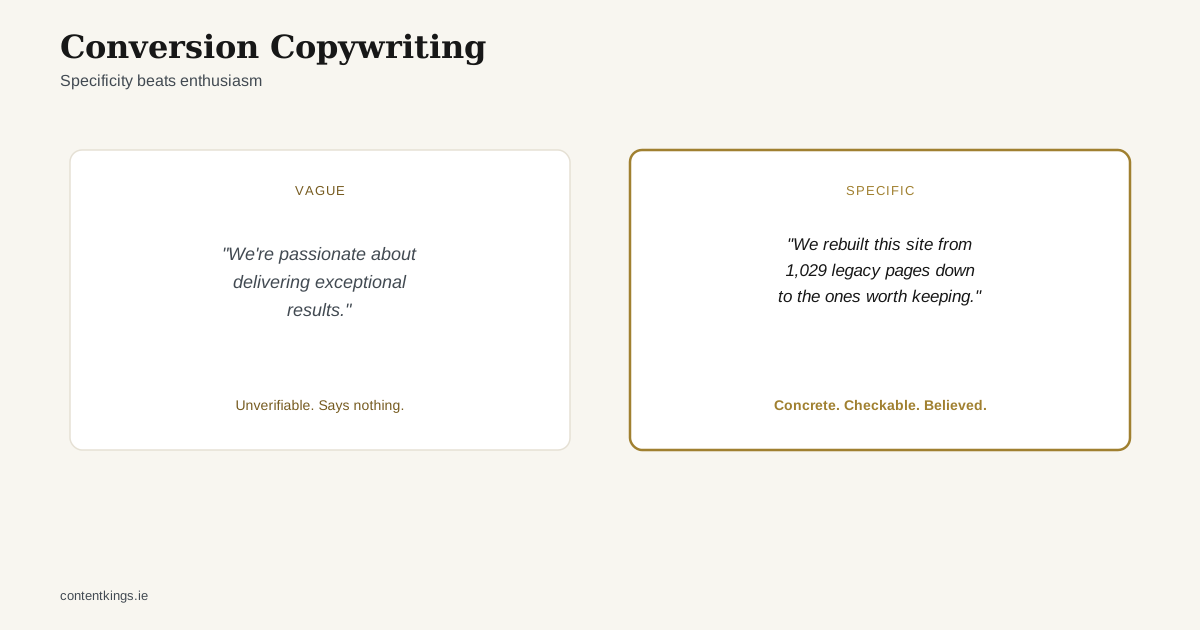
“We’re passionate about delivering exceptional results” tells a reader nothing and asks them to trust a claim with no evidence behind it. “We rebuilt this website from a 1,029-page legacy site down to the pages actually worth keeping” is a specific, checkable claim that does more persuasive work in fewer words, because it’s concrete enough to be believed. Vague enthusiasm is the most common failure mode in copy that’s trying to convert and isn’t - replacing it with specific, true detail is usually the highest-leverage single edit available.
Match the call to action to actual commitment level
A first-time visitor who just arrived from a search result is rarely ready for “Buy now” or “Sign a contract.” They’re more likely ready for “see examples,” “get a quote,” or “ask a question.” Mismatching the ask to where someone actually is in their decision tends to suppress conversion more than weak writing does - the copy can be perfectly clear and still underperform if it’s asking for more commitment than the reader has built up yet.
Remove friction, don’t just add persuasion
Sometimes the highest-impact change isn’t a sentence at all - it’s making the phone number clickable on mobile, shortening a form from nine fields to four, or putting the contact method people actually prefer above the fold instead of at the bottom of the page. Copywriting and page design aren’t separate problems here; the words and the structure around them both contribute to the same hesitation.
Honesty is a conversion tactic, not a constraint on one
Overstating a claim to sound more impressive tends to backfire once a reader checks (and on anything with real stakes, they will check) - and it’s also just not something we’re willing to write, regardless of whether it would convert better in the short term. The version of conversion copywriting worth doing is the one where the specific, true, well-organised version of your actual offer is allowed to do the persuading, rather than inflated language standing in for it.
If you want a page rewritten with this approach rather than a generic sales-page template, that’s what our content and copywriting work covers.